
PLA: the practical starting point
PLA is usually the easiest of these three materials to print. It works well for display pieces, prototypes, organizers, classroom projects and many indoor parts. It tends to hold detail well and requires less aggressive printer settings than many engineering materials.
Its limitation is the finished environment. PLA can soften in a hot vehicle or near equipment that produces heat. It is also not the first choice for a part that must flex repeatedly or absorb hard impacts.
PETG: tougher parts with more environmental resistance
PETG is a common choice for functional brackets, shop fixtures, containers and parts that may see moisture. It generally offers more toughness and temperature resistance than basic PLA while remaining accessible on many consumer printers.
PETG can string, collect on the nozzle or bond too aggressively to some build surfaces. A clean material path, dry filament and the correct plate guidance matter. More heat resistance does not make every PETG part suitable for a high-temperature or safety-critical application.
TPU: flexible parts and impact absorption
TPU is used for flexible guards, feet, seals, bumpers, straps and parts that need to bend. The exact feel depends on the material hardness and the printed geometry. A thick TPU wall can feel firm while a thin one flexes easily.
Flexible filament needs a controlled feed path and usually prints more slowly. Some extruder designs handle it better than others. Begin with the printer manufacturer's compatible-material guidance and a proven profile.
Choose from the part requirements
Write down what the part must survive: heat, sunlight, moisture, chemicals, impact, constant load or repeated flexing. Then choose the material and print orientation together. Layer direction can matter as much as the filament label because printed parts are not equally strong in every direction.
- Use PLA for straightforward indoor parts, visual models and early prototypes.
- Consider PETG when toughness, moisture exposure or warmer service conditions matter.
- Use TPU when controlled flexibility, grip or impact absorption is the main requirement.
- Ask for guidance when a part is load-bearing, exposed to heat or used around food, electricity or personal safety.
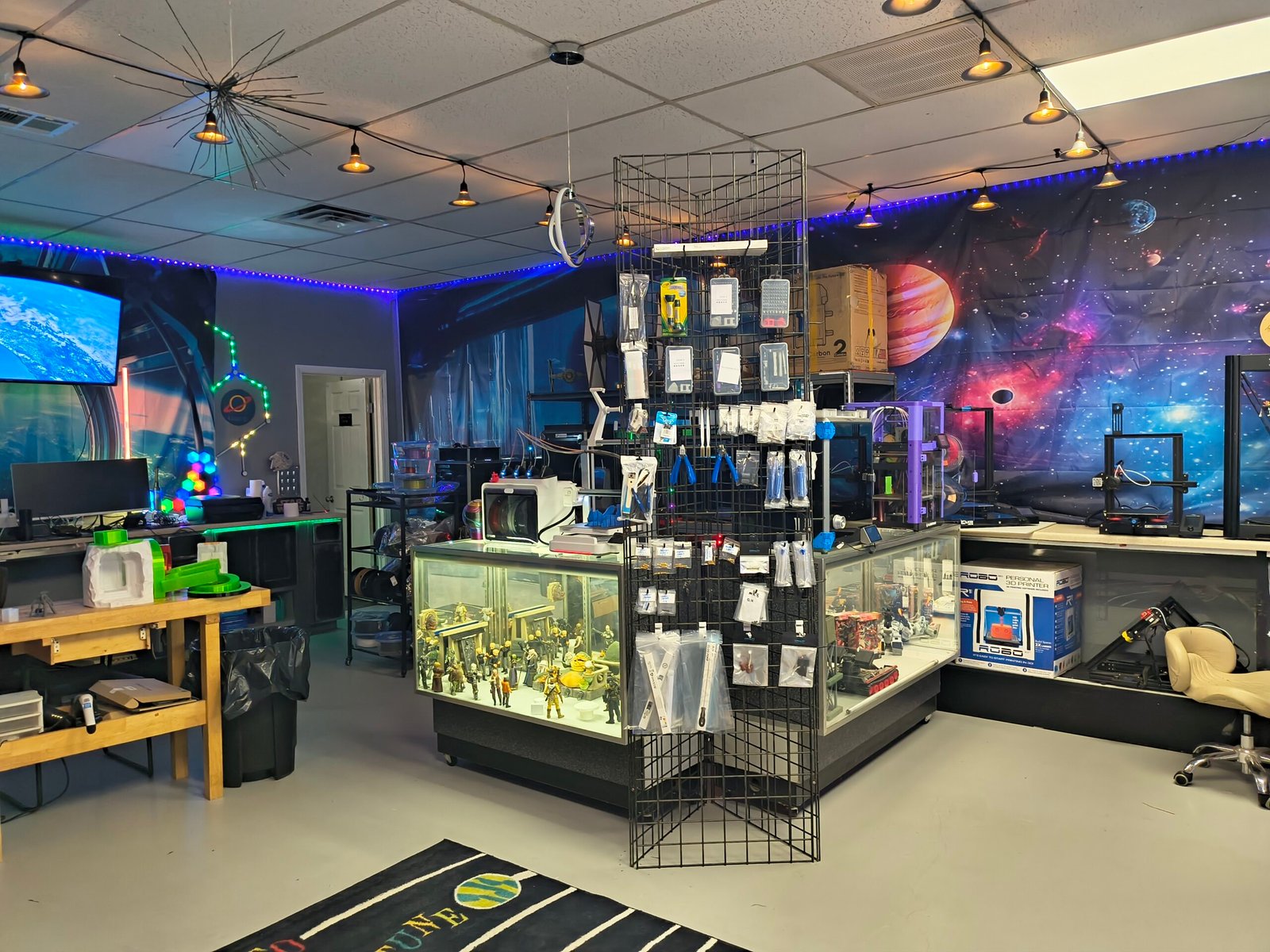
Buy with support or ask Cosmic 3D
Cosmic 3D stocks filament locally and helps Oklahoma makers match material to project. Our Recommended Gear page also links to a wider MatterHackers selection for items not available in the shop. Affiliate links are clearly marked and do not increase your purchase price.